Free Pond Lapbook Printable (6-Page Pond Unit Study)
Explore life above and below the water with this free pond lapbook printable! This six-page set gives kids a pond scene to build, question flaps to fill in, and pockets for organizing what they learn about pond plants and habitats.
Use it as a hands-on pond lapbook project for your homeschool science lessons or a classroom pond unit study. Children can color, cut, sort, and write as they turn the pages into a little collection of their discoveries.
Want to add a craft day to your lessons? Our pond animal crafts give kids more creatures to make for a class display. You could start with the frog printable craft alongside the frog and tadpole pictures in this set.
Why You’ll Love This Pond Lapbook
- Several ways to learn: Combine coloring and cutting with reading, discussion, and short written answers.
- A place to keep discoveries: The flaps and pockets help children organize their pond study in one folder.
- Flexible for different learners: Younger children can draw or dictate answers, while more confident writers can add sentences.
- Easy to spread out: Complete one section at a time during a pond theme or freshwater habitat unit.
Materials
- The six-page pond lapbook printable: Find the signup section near the bottom of this post.
- Printer paper: Regular paper is easy to fold for the question flaps. Lightweight cardstock is an optional choice for the cards and pockets.
- A file folder or folded cardstock: Use this as your lapbook base, with extra cardstock if you need an extension.
- Scissors and a glue stick: Have an adult help with the smaller animal pieces.
- Crayons or colored pencils: For decorating the outline pictures.
- A pencil and a pond book: Use them to research the questions and record answers.
What’s Included in the Pond Lapbook Printable?
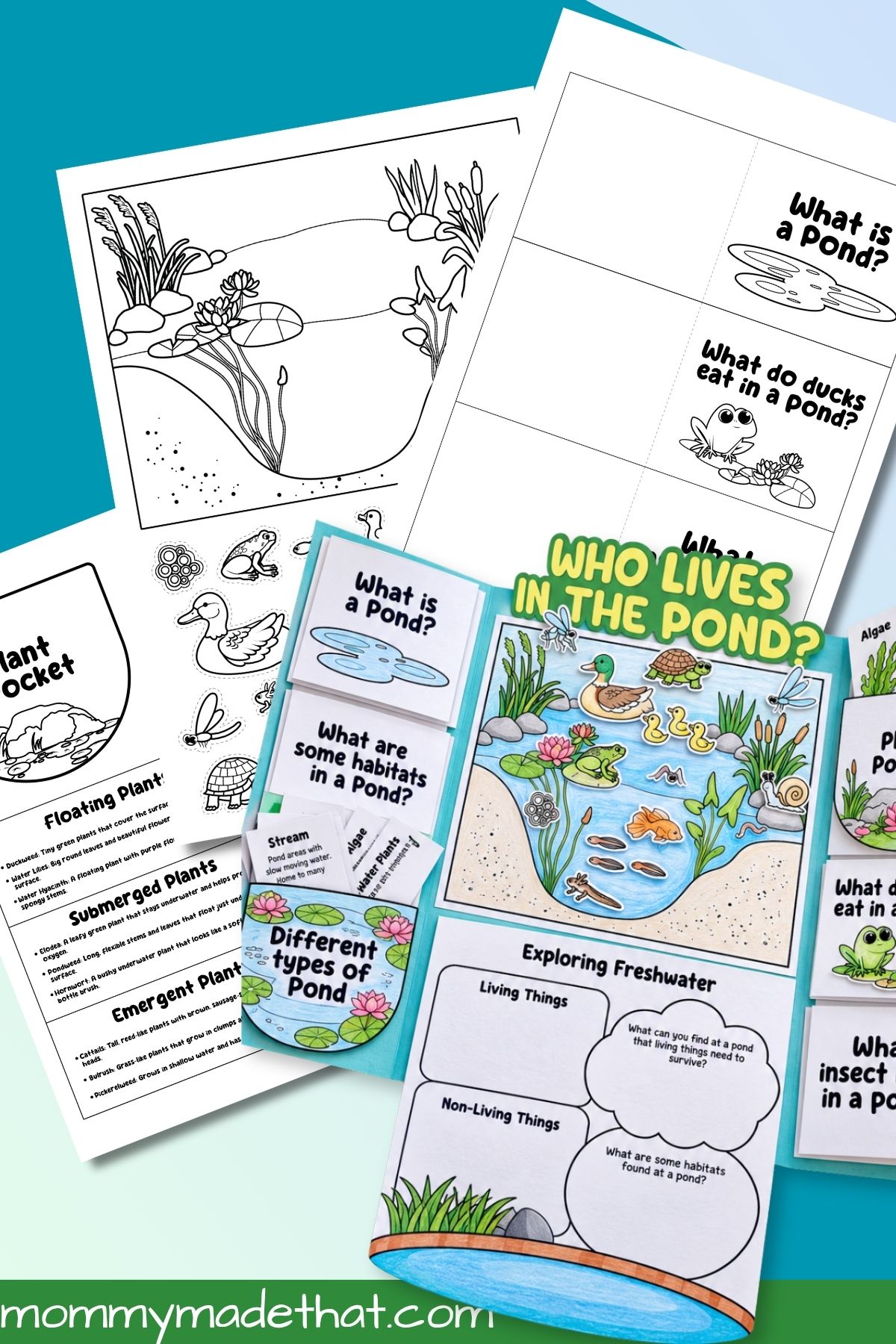
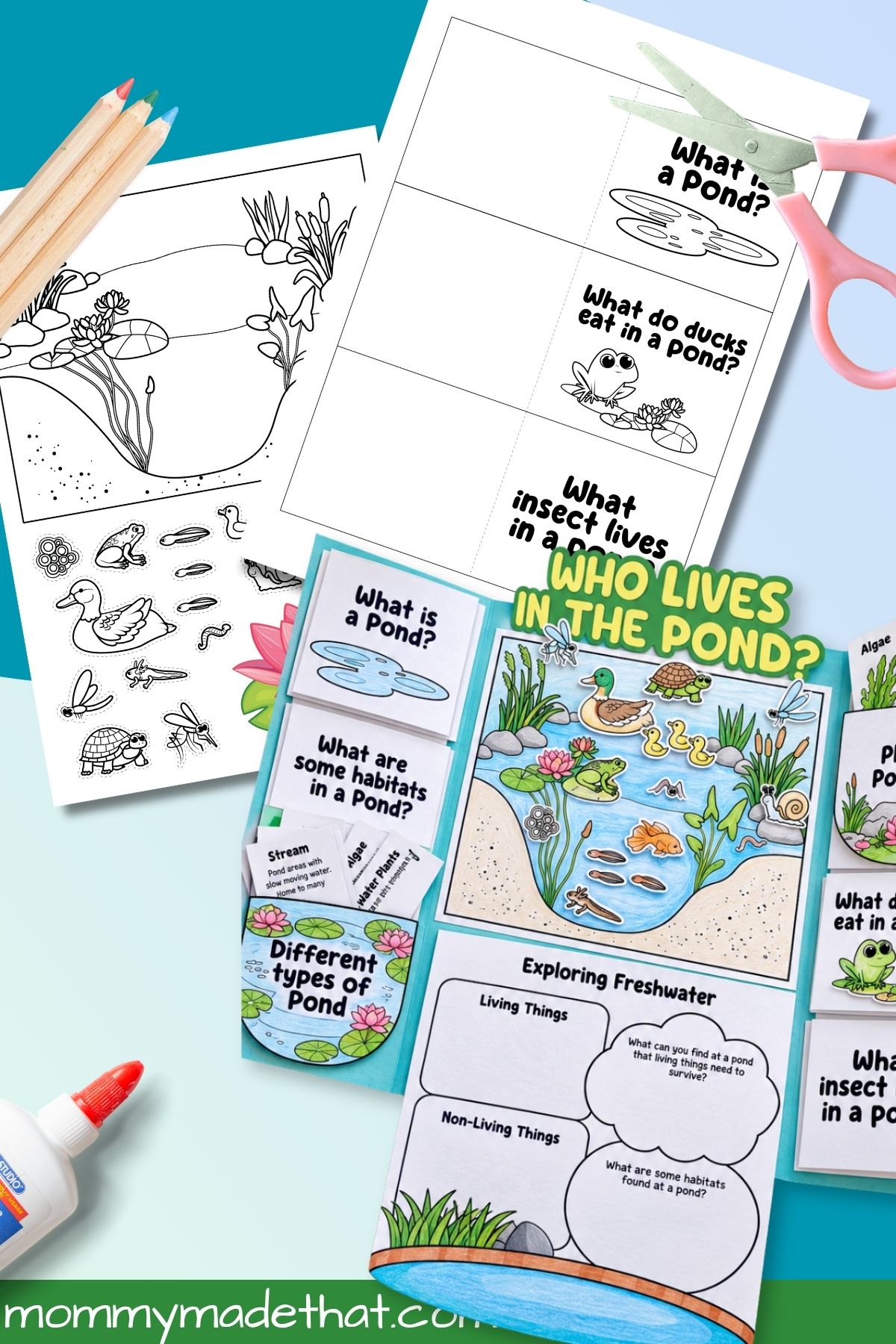
The download includes six printable pages. Most of the learning pieces have black-and-white outlines for children to color, with colored titles and pond decorations included too.
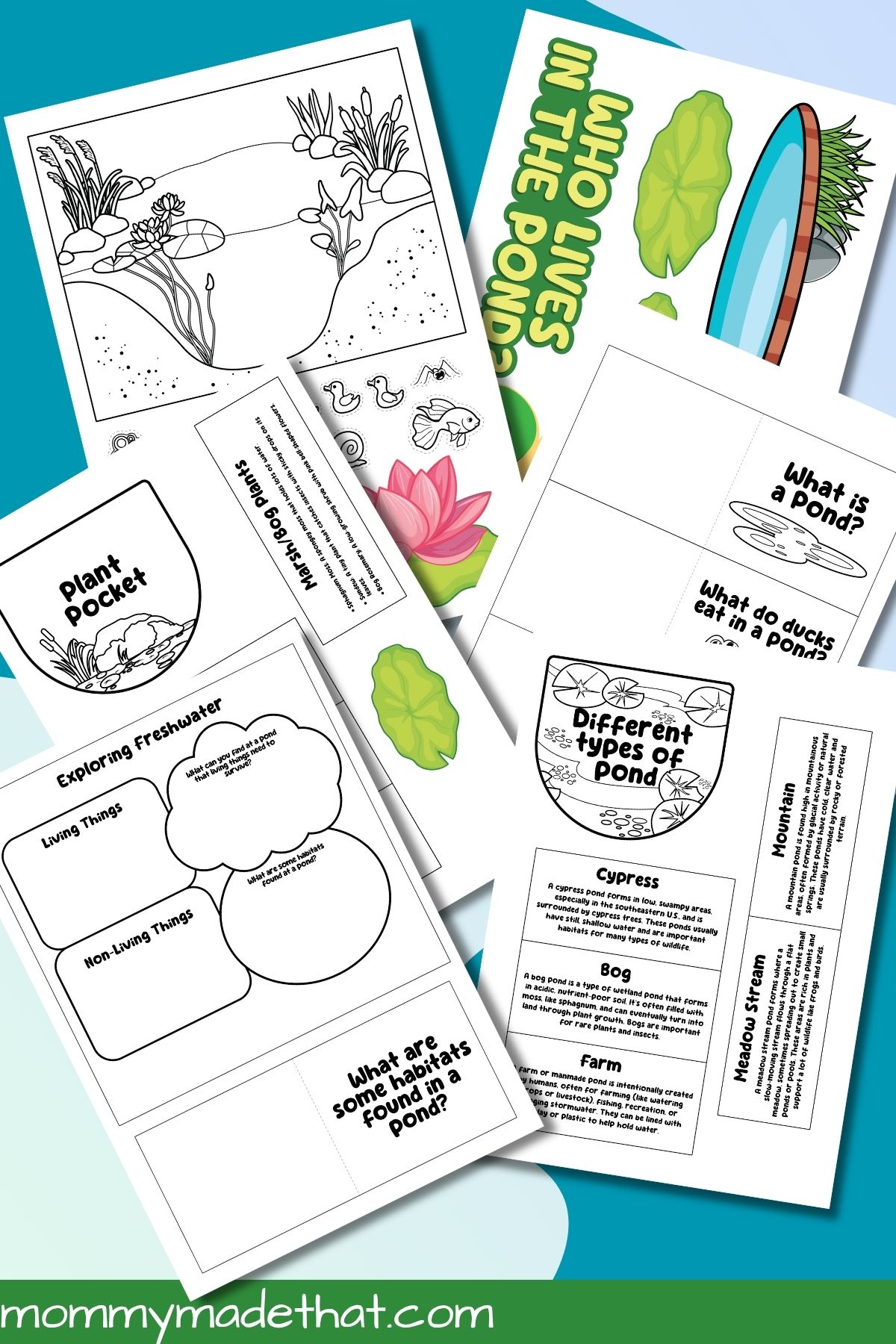
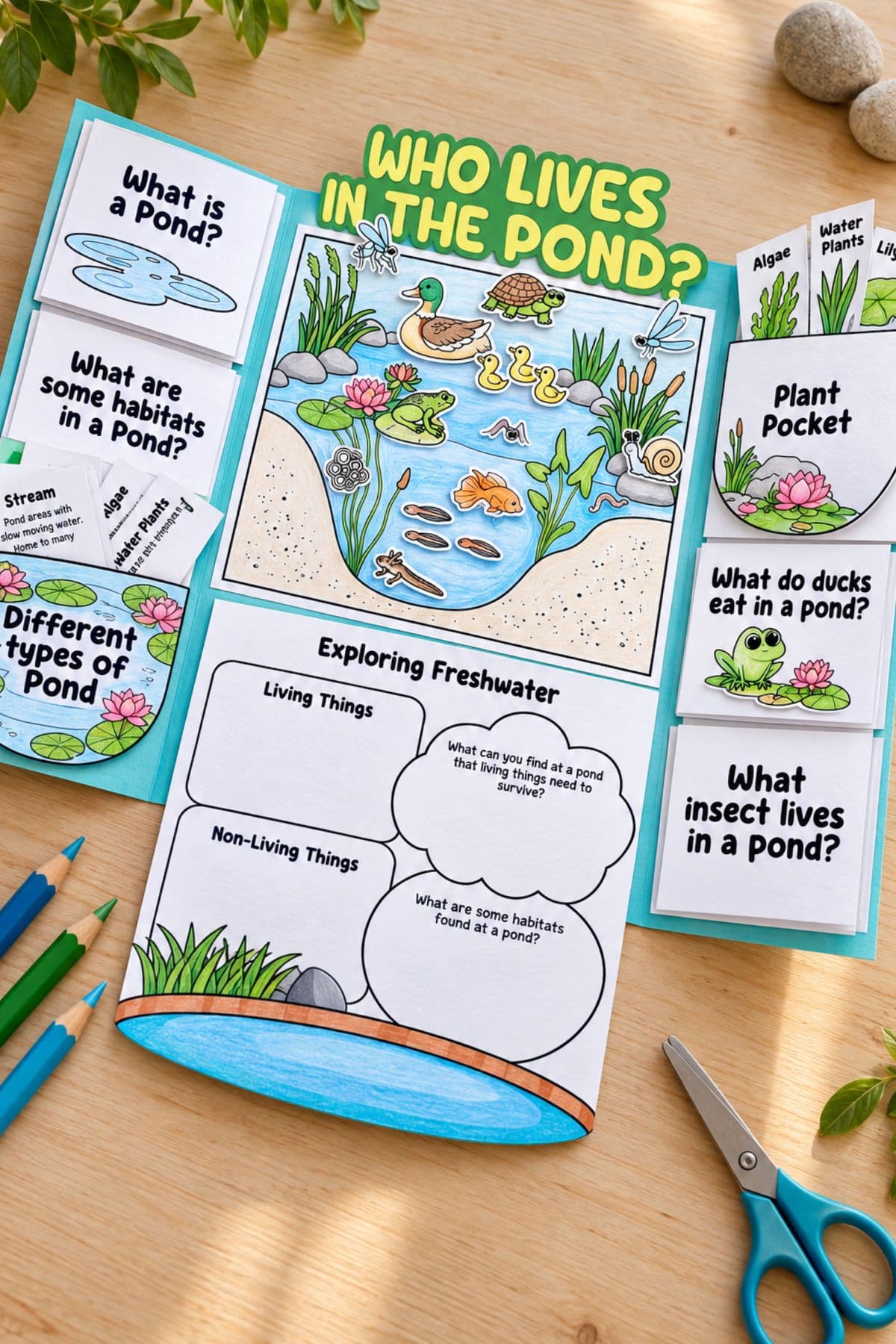
- Pond scene and animal cutouts: A pond cross-section with plants, plus pictures including a duck and ducklings, frog, eggs, tadpoles, fish, turtle, snail, and insects.
- Three question flaps: Prompts asking what a pond is, what ducks eat in a pond, and what insect lives in a pond, with blank space for responses.
- Pond-type pocket and reading cards: A “Different types of Pond” pocket with cards labeled Cypress, Bog, Farm, Mountain, and Meadow Stream.
- Plant pocket and information cards: A pocket with cards grouped under Floating Plants, Submerged Plants, Emergent Plants, and Marsh/Bog Plants.
- Exploring Freshwater worksheet: Spaces for living and non-living things, what living things need to survive, and habitats found at a pond. This page also includes a separate habitat question flap.
- Titles and decorations: Colored “Pond Lapbook” and “Who Lives in the Pond?” lettering, lily pads, and a pond illustration.
The question flaps are open-ended, so children will need a book, a lesson, or your help to develop their answers. The set gives you pieces for recording learning rather than a complete pond science curriculum.
How to Make a Pond Lapbook
- Print and color. Print the six pages, then color the pond scene, animal pictures, flaps, and pockets before cutting. Keep the text on the reading cards clear.
- Prepare the folder. Open a file folder flat and fold its outer edges toward the center to make two doors. Lay out the largest pieces before gluing. Add a cardstock extension if you want room for the full freshwater worksheet.
- Build the pond scene. Cut out the scene and animal pieces. Let children arrange the animals around the water and plants, explaining their choices before attaching them.
- Make the question flaps. Cut each complete question strip along its outside edges, keeping the blank half attached. Fold on the dotted line so the question is on the front, then write or draw the answer inside. Glue only the back to the folder.
- Add the pockets. Cut out each pocket shape and its matching information cards. Apply a narrow line of glue along the sides and bottom of each pocket, leaving the top open. Let the glue dry before sliding in the cards.
- Record and decorate. Complete the freshwater worksheet, attach the titles and decorations, and check that the flaps open freely. Let your child show you one new thing they learned.
Top Tips
- Arrange everything first. Folder sizes vary, so test the layout with the printed pieces before gluing. The worksheet can also stay loose inside the folder.
- Keep small pieces together. A shallow tray or envelope helps keep the tadpoles, insects, and other tiny cutouts from disappearing.
- Leave the pocket opening clear. Too much glue can seal the top or make the cards difficult to slide in.
- Build it over several lessons. Children can add one section after each reading or activity instead of finishing the entire project in one sitting.
Pond Unit Study Ideas for Teachers and Homeschoolers
This pond habitat activity works well as a place to collect learning throughout a short unit. Choose the sections that fit your children, and pair the printable with photographs, read-alouds, or observations of a local pond.
Begin with “Who lives in the pond?” Look through a pond book and invite children to identify animals they recognize in the cutouts. Make a simple class list of creatures to learn more about. Our duck printable craft makes a fun follow-up to the duck question flap.
Use the plants as a sorting activity. Read the plant cards together, then look for examples in photographs. Ask children to point out plants at the water’s surface, below it, and around the edges. They can add a small drawing beside their notes.
Practice observing and recording. Use the “Exploring Freshwater” worksheet after looking at a detailed pond photograph or visiting a pond with an adult. Children can draw or write examples in the living and non-living boxes, then explain their choices.
Add an animal research task. Let each child choose one creature and find a fact to share. Pair their research with our dragonfly printable craft or turtle printable craft for a separate display beside the finished lapbooks.
Finish with a lapbook share. Ask each child to open a flap, read a card, and describe the pond scene. For a homeschool pond unit study, this can be a simple oral review; in a classroom, partners can take turns sharing their favorite section.
For kindergarten learners, try adult-read cards, dictated answers, and prepared cutouts. First and second graders can add labels or short sentences. Older elementary children can extend the same pond lapbook project with their own research notes on extra paper.
Printing Tips
Print from the downloaded PDF rather than the display pictures in this post. Use your printer’s preview to check that the outside borders fit on the paper, and select “Fit” if any edges would otherwise be clipped.
Print one-sided so the backs remain available for folding and gluing. Color printing keeps the green titles and pond decorations bright, but grayscale is an option if you do not need those pieces in color. Test one set before making copies for a group, especially if you plan to use cardstock.
Grab the Free Pond Lapbook Printable
Ready to put together your own pond unit study? Grab the six-page set and help your kids build a lapbook full of pond discoveries.
Put your name and email in the pink box below, and we’ll send the free printable straight to your inbox.
Subscribe to our newsletter and get these printables sent straight to your inbox! Already a subscriber? Don’t worry you won’t be subscribed twice but it will send this printable straight to your inbox!
(We will never share or sell your personal information. Read more on our privacy policy.) We will use the information below to send you our newsletter with latest posts and special offers.
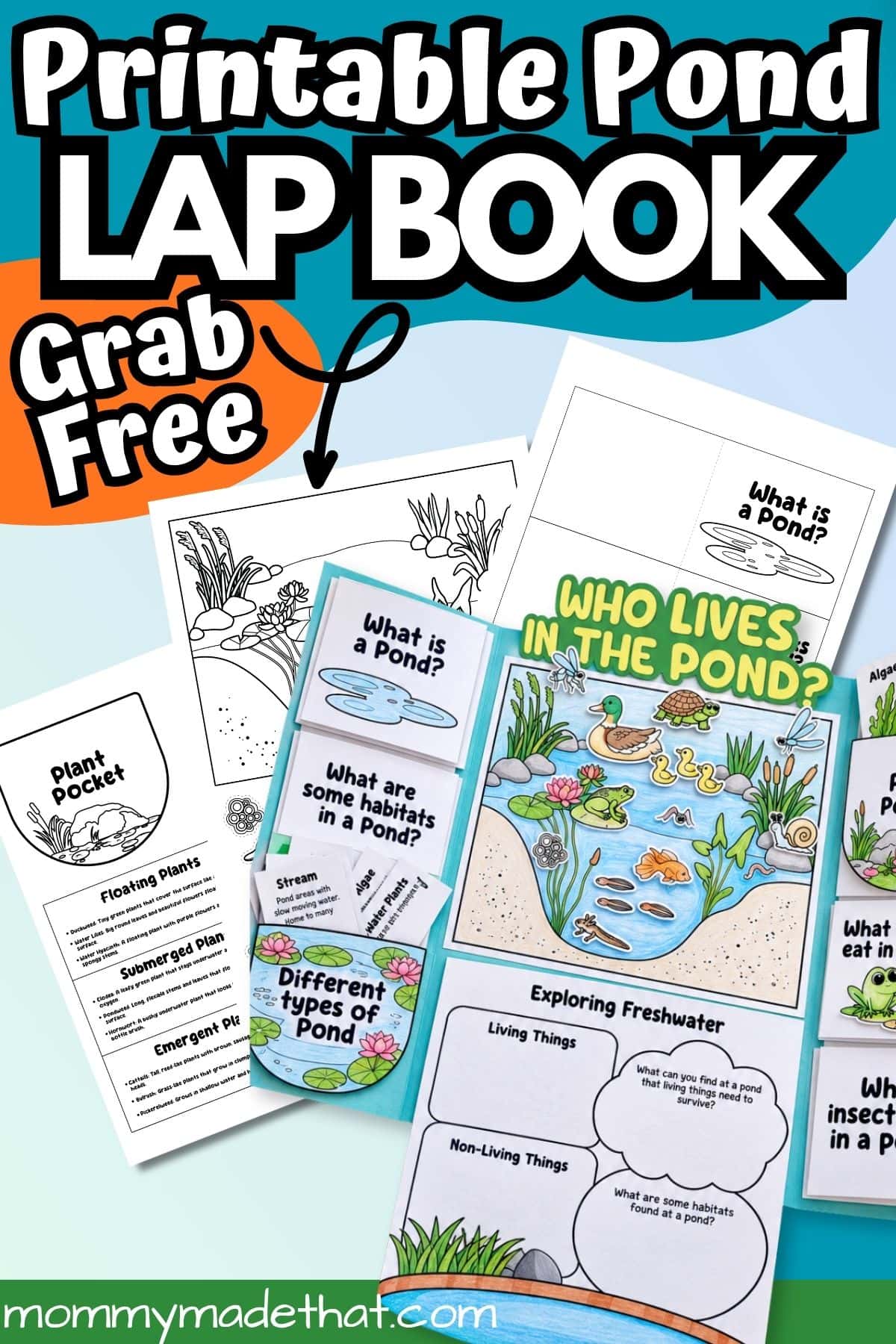
Keep the finished lapbook handy as you read and explore together. Kids can revisit the flaps and cards whenever they want to share what they have learned about life at the pond.